What Is a Symbolic Wedding Ceremony in Italy, and Why Do Most Destination Couples Choose One?
What is a symbolic wedding ceremony in Italy? Who can lead it, where it can happen, how it pairs with a legal wedding at home, and why it's so popular.
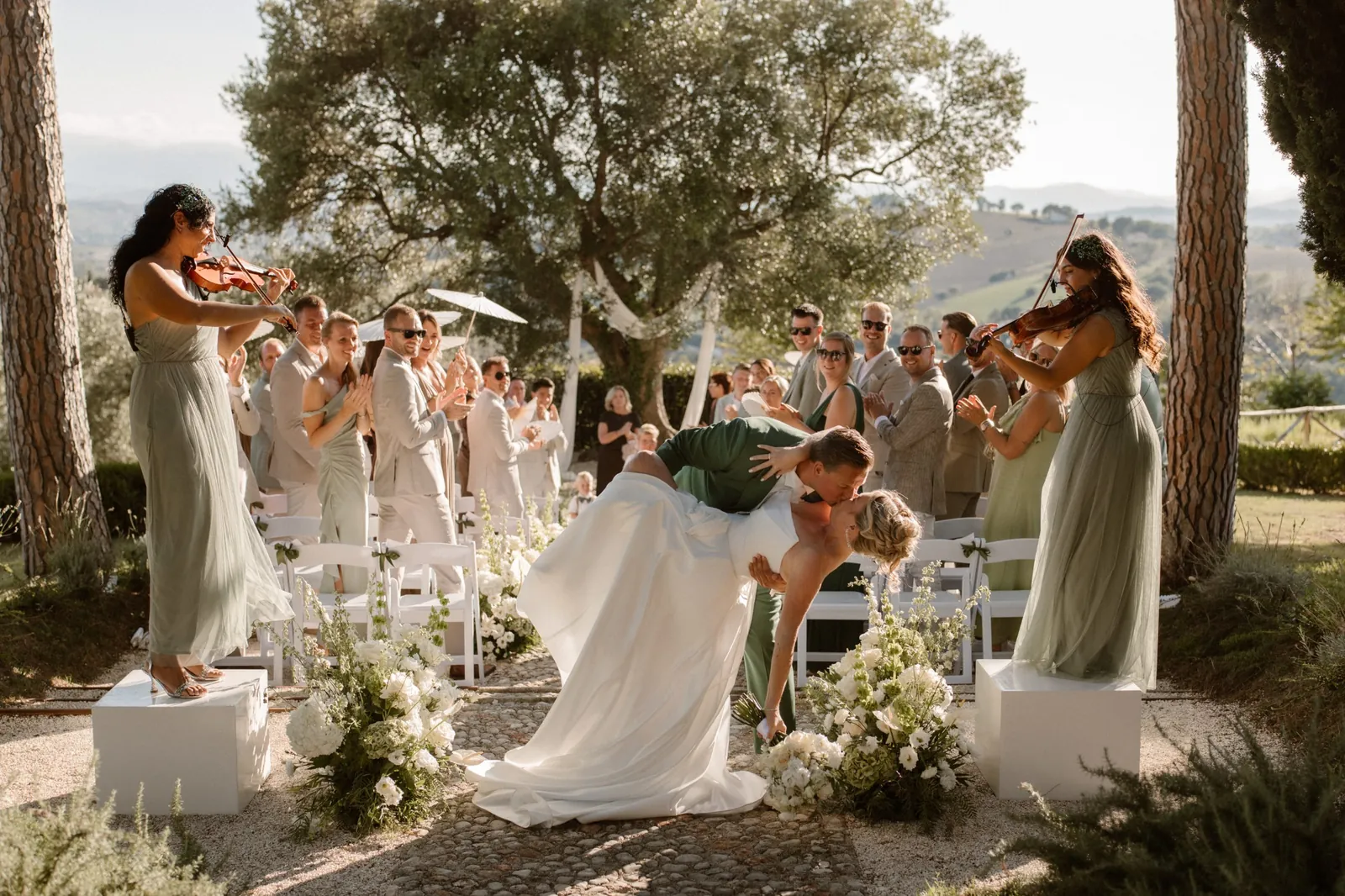
A symbolic wedding ceremony in Italy is a ceremony without legal effect: you make your promises in front of your guests, but the legal marriage happens separately, usually at a registry office at home. Because it isn't a legal act, there's no Italian paperwork, anyone you like can lead it, and it can take place almost anywhere, under an olive tree included. That freedom is why most foreign couples choose one: in 2024, 64% of foreign weddings in Italy were symbolic.
It still counts. Ask anyone who's cried at one.
How popular are symbolic ceremonies in Italy?
Very. Research by the Centro Studi Turistici di Firenze for Italy for Weddings found that of the more than 15.000 foreign weddings in Italy in 2024, 64% were symbolic, against 22,5% civil and 13,5% religious. So if you go symbolic, you're in the majority, and every planner working with foreign couples will know exactly how to make it feel like the real thing. Because it is.
Why do destination couples choose a symbolic ceremony?
Mostly for three reasons:
- No foreign paperwork. A legal wedding in Italy means documents from your own country, apostilles, translations, a declaration at the town hall and an interpreter. We explained it all in can foreigners legally get married in Italy? A symbolic ceremony skips the lot.
- Your place, your time. A civil ceremony happens at the town hall or a location the comune has designated, at a time that suits the comune. A symbolic ceremony happens where and when you want: at 16.00 in the garden, with the light just right.
- Your words. No set legal formula. You write the vows, choose the readings and the music, and decide how long it lasts (please, not three hours).
Who can lead a symbolic ceremony?
Anyone. Since the ceremony has no legal weight, there are no rules about who officiates. Couples usually choose one of these:
- A professional celebrant, who meets you beforehand, gets to know your story and writes a ceremony around it. Many work in English, and some in two languages at once.
- A friend or family member. The best man who knows all your secrets, or the aunt who introduced you. Personal, often hilarious, sometimes both.
- A mix. A celebrant runs the ceremony, with friends doing readings or telling part of your story.
Whoever it is, give them a rehearsal and a microphone. Your guests at the back want to hear the good bits too.
Where can a symbolic ceremony take place?
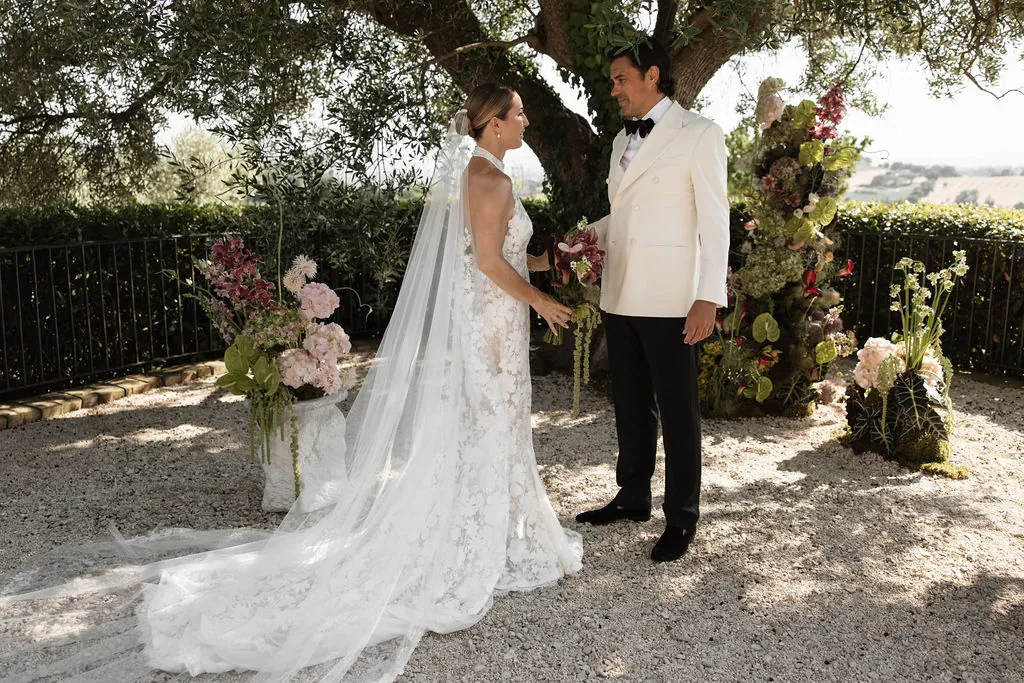
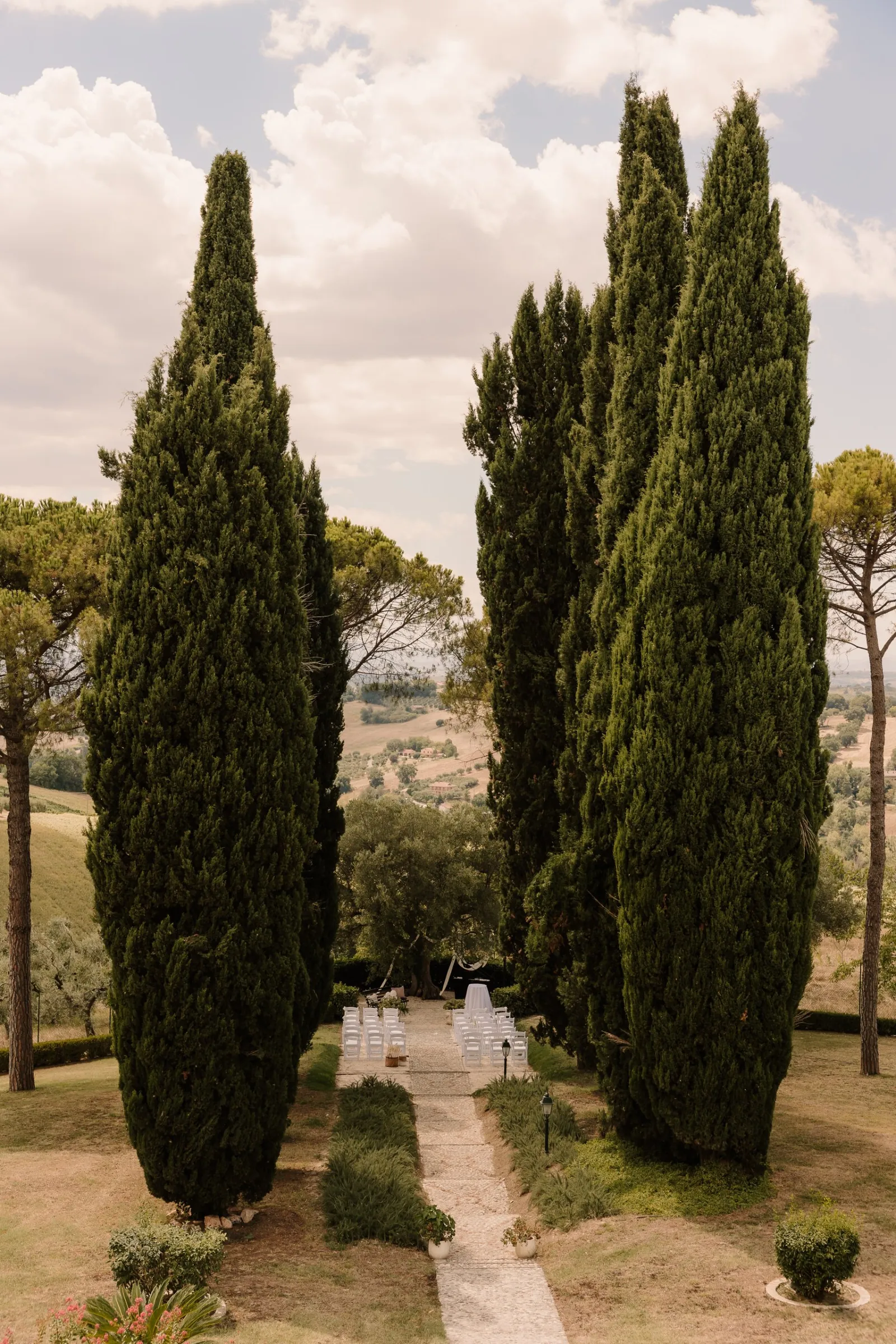
Wherever the venue allows. In a garden, on a terrace with a view, on a cobbled path between cypresses, in an olive grove. That's the real luxury of going symbolic: you choose the setting first, not the paperwork.
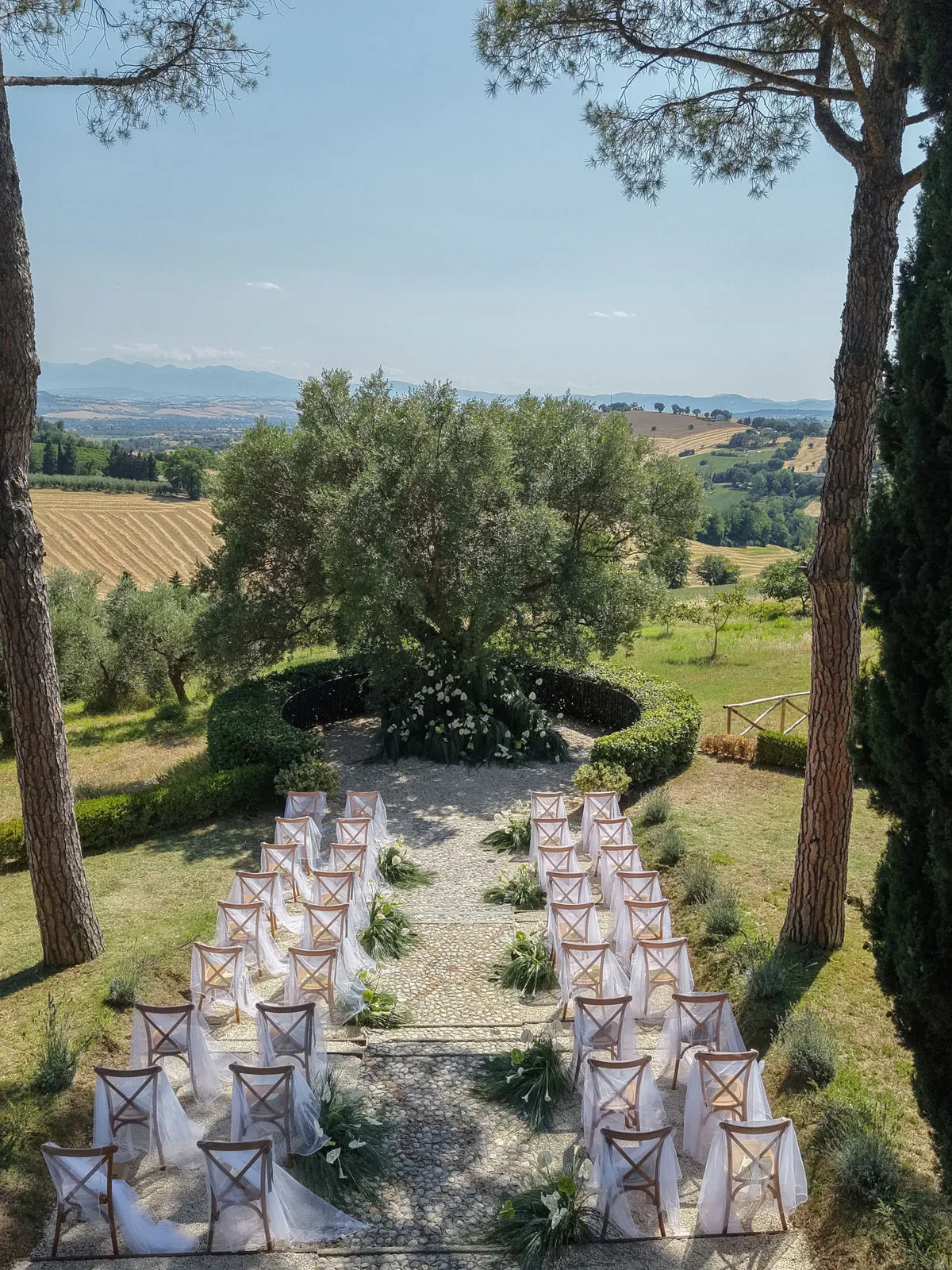
At Maniero, the ceremony spot is under an old olive tree with views over the hills of Le Marche, reached by a long natural stone stairway. In the example schedule in our Wedding brochure 2029, the ceremony starts at 16.00, after the welcome drinks, and the DJ takes care of the audio so every promise is heard. You can stand on the exact spot in our virtual tour, and even check where the shade falls at your time of day.
How does it pair with a legal wedding at home?
Simply. Most couples do it like this:
- Sign the legal papers at home, at a registry office or with a registrar, a few days or weeks before you fly. Small and quick, often just the two of you and two witnesses.
- Fly to Italy and have the ceremony that counts for you, with all your people there.
- Celebrate your Italian date as your anniversary, if you like. Plenty of couples do.
Check your own country's rules for the legal part, as they vary. Some couples tell their guests about the legal bit, some keep it quiet. Both are fine.
What makes a symbolic ceremony feel meaningful?
The same things that make any ceremony meaningful: your story, your words and your people. A few ideas:
- Write your own vows, and keep them short enough to say without notes shaking in your hand.
- Add a ritual: a ring warming where every guest holds the rings for a moment, a sand or wine ceremony, or a handfasting.
- Let guests take part: a reading in your grandmother's language, a song from a friend, or the whole circle answering "we will" when asked to support you.
- Think about comfort: shade, water, and a ceremony that ends before anyone looks at their watch.
How do you organise it at Maniero?
At Maniero you always work with a wedding planner, and the officiant and ceremony details are part of what your planner helps you arrange. They aren't included in the villa rental or in any example price. Maniero only rents out the villa, for weddings up to 90 guests, with the whole estate yours from Friday to Sunday. Have a look at the gallery to picture it, or read more on the wedding venue page.
Ready to say it under the olive tree?
2027 and 2028 are fully booked, 2028 has a waiting list, and we're now taking requests for 2029. Tell us a little about the two of you and the ceremony you're imagining, and send us a message.
Maniero Montecassiano
An exclusive-use villa for weddings, holidays and retreats in Le Marche. Only ten stays a year.