Can Foreigners Legally Get Married in Italy? Civil, Symbolic and Religious Ceremonies Explained
Can foreigners legally get married in Italy? Civil, religious and symbolic ceremonies, the documents (nulla osta), the comune, interpreters and timing.
Yes, foreigners can legally get married in Italy, and you don't need to live here. You'll need a document from your own country confirming you're free to marry (often called the nulla osta), your passports and other paperwork translated into Italian, a declaration at the town hall (the comune), and an interpreter if you don't speak Italian. Many destination couples skip all that, marry legally at home and have a symbolic ceremony in Italy instead.
One important note first: this is a general overview, not legal advice. Rules differ by nationality and by comune, and they change, so always check the details with your planner and your embassy or consulate.
What are the options: civil, religious or symbolic?
| Civil | Religious | Symbolic | |
|---|---|---|---|
| Legally binding in Italy | Yes | Catholic: yes, if registered. Other faiths: check | No |
| Who leads it | The mayor or a deputy at the comune | A priest or minister | Anyone you choose |
| Where | The town hall or a place the comune has designated | Usually a church | Wherever you like |
| Paperwork in Italy | Yes | Yes, civil and church | None |
Italy is used to all three. In 2024, of more than 15.000 foreign weddings in Italy, 22,5% were civil, 13,5% religious and 64% symbolic, according to research by the Centro Studi Turistici di Firenze for Italy for Weddings.
Which documents do you need?
Italian law (article 116 of the civil code) asks foreigners to show the civil registrar a declaration from their own country's authorities that there is no impediment to the marriage. That's the famous nulla osta. How you get it depends on your passport:
- UK citizens apply for a certificate of no impediment, which GOV.UK explains is the nulla osta, from the British Embassy in Rome by post. You sign a notice of marriage and an affirmation in front of a notary first.
- US citizens need a sworn statement (dichiarazione giurata) signed in front of a US consular officer in Italy, which is then legalised at the local Prefettura, plus an atto notorio: a declaration sworn by two witnesses, made before an Italian consul abroad or at a court in Italy. The Italian consulate in San Francisco says the atto notorio is valid for 90 days.
- Other nationalities (Canada, Australia, the Netherlands, Germany and so on) follow their own country's process. Your embassy or consulate in Italy will tell you what proves you're free to marry.
On top of that, expect to need valid passports, birth certificates and, if either of you was married before, proof that the marriage ended. The US Embassy in Italy notes that foreign documents must carry an apostille and an Italian translation, and that public documents from outside the EU count as valid for only six months from their issue date. So don't order them too early.
What happens at the comune?
Once the paperwork is ready, you take it to the marriage office (ufficio matrimoni) of the comune where you'll marry. There you make a declaration of intention to marry in front of the civil registrar, with an interpreter if you don't speak Italian. According to the US Embassy, the banns that Italian residents have to post for two weeks are waived or shortened for couples where neither partner is Italian or lives in Italy, depending on the town hall.
The civil ceremony itself is led by the mayor or a deputy, with two adult witnesses. You'll also need an interpreter at the ceremony if you don't understand Italian, and a witness can't double as the interpreter.
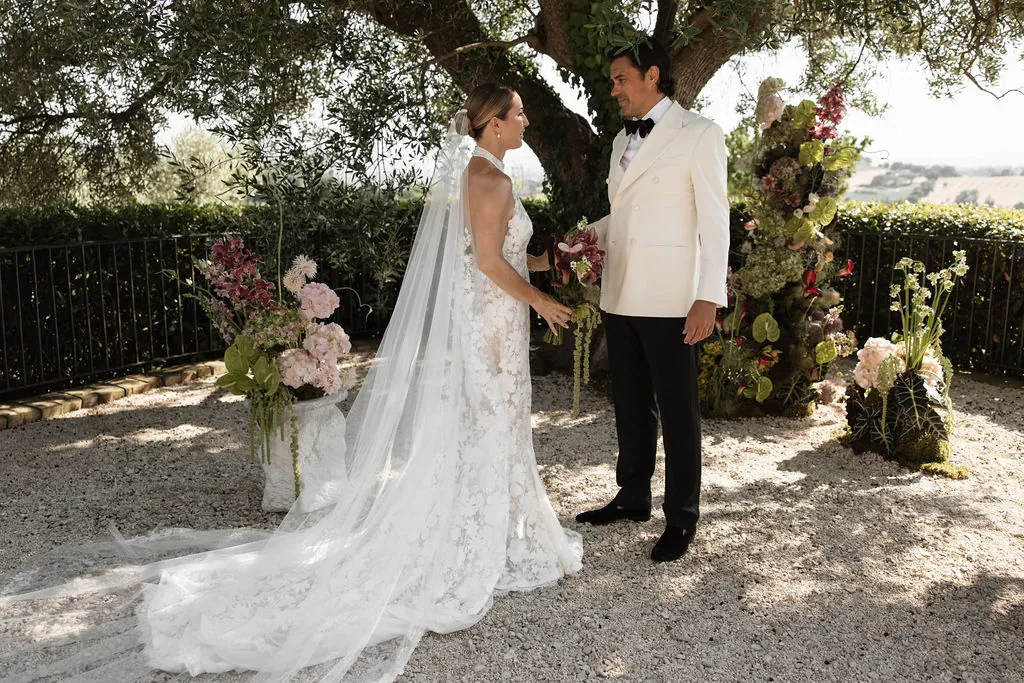
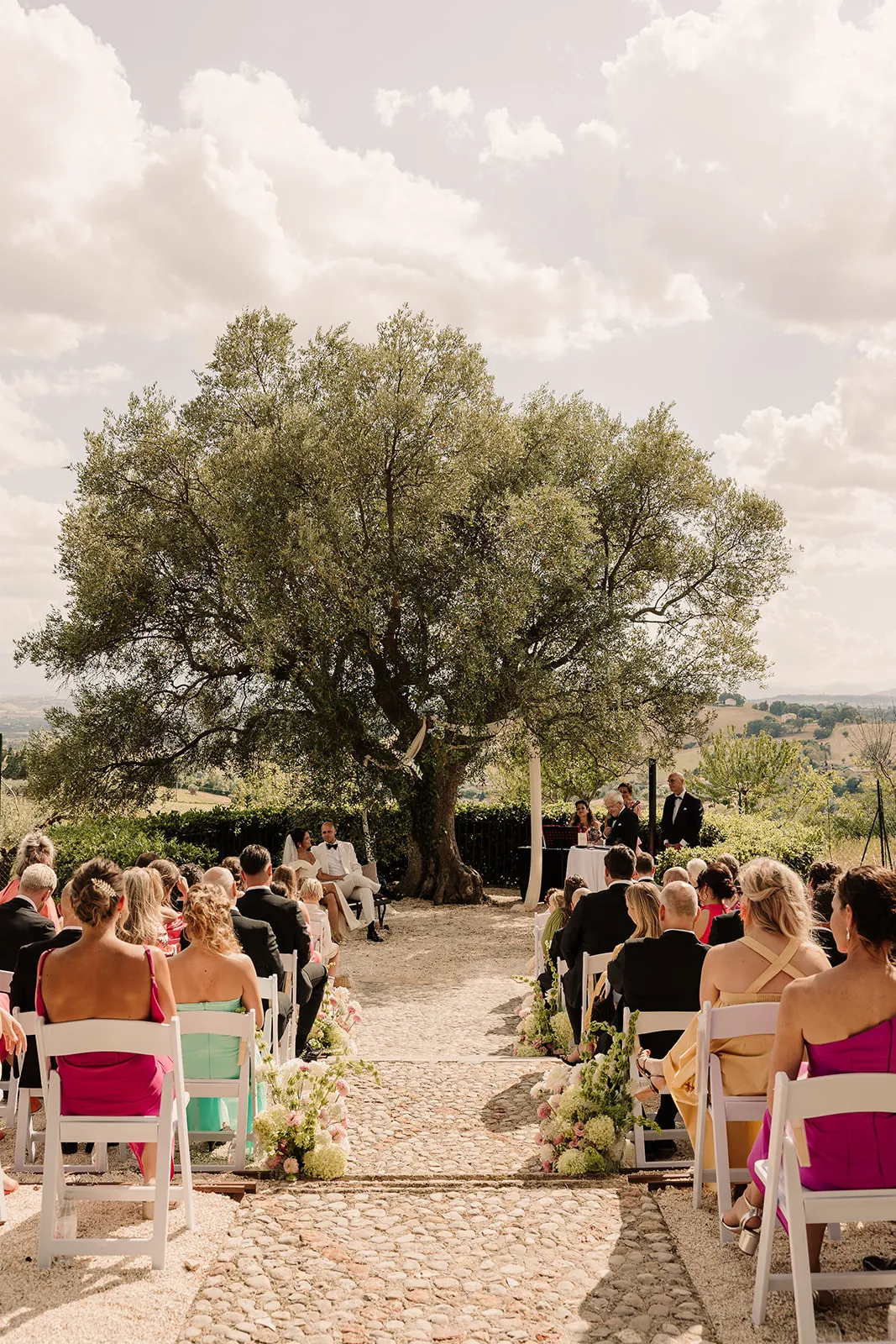
Where can it happen? Italian law says a civil wedding takes place at the town hall. Some comuni also designate other places, such as a historic building or a garden, as official wedding locations under strict conditions. Whether a particular villa can host a legal ceremony depends entirely on the comune, so ask your planner early.
A note for same-sex couples: Italy doesn't offer same-sex marriage, but since 2016 same-sex couples can enter a civil union (unione civile), with its own process at the comune.
Can you have a religious ceremony?
Yes. The US Embassy explains that a ceremony led by a Roman Catholic priest is valid for the state too, because the priest registers the marriage with the civil authorities. That means church paperwork on top of the civil documents (baptism and confirmation certificates, for example), so start with your parish at home. For other faiths, the Embassy advises a civil ceremony first and the religious ceremony after.
Why do so many couples marry at home first?
Because it's simpler. Look at the list above: consulate appointments, apostilles, translations, a declaration at the comune a few days before the wedding, interpreters and a fixed civil ceremony. All of that while you're also hosting guests from abroad.
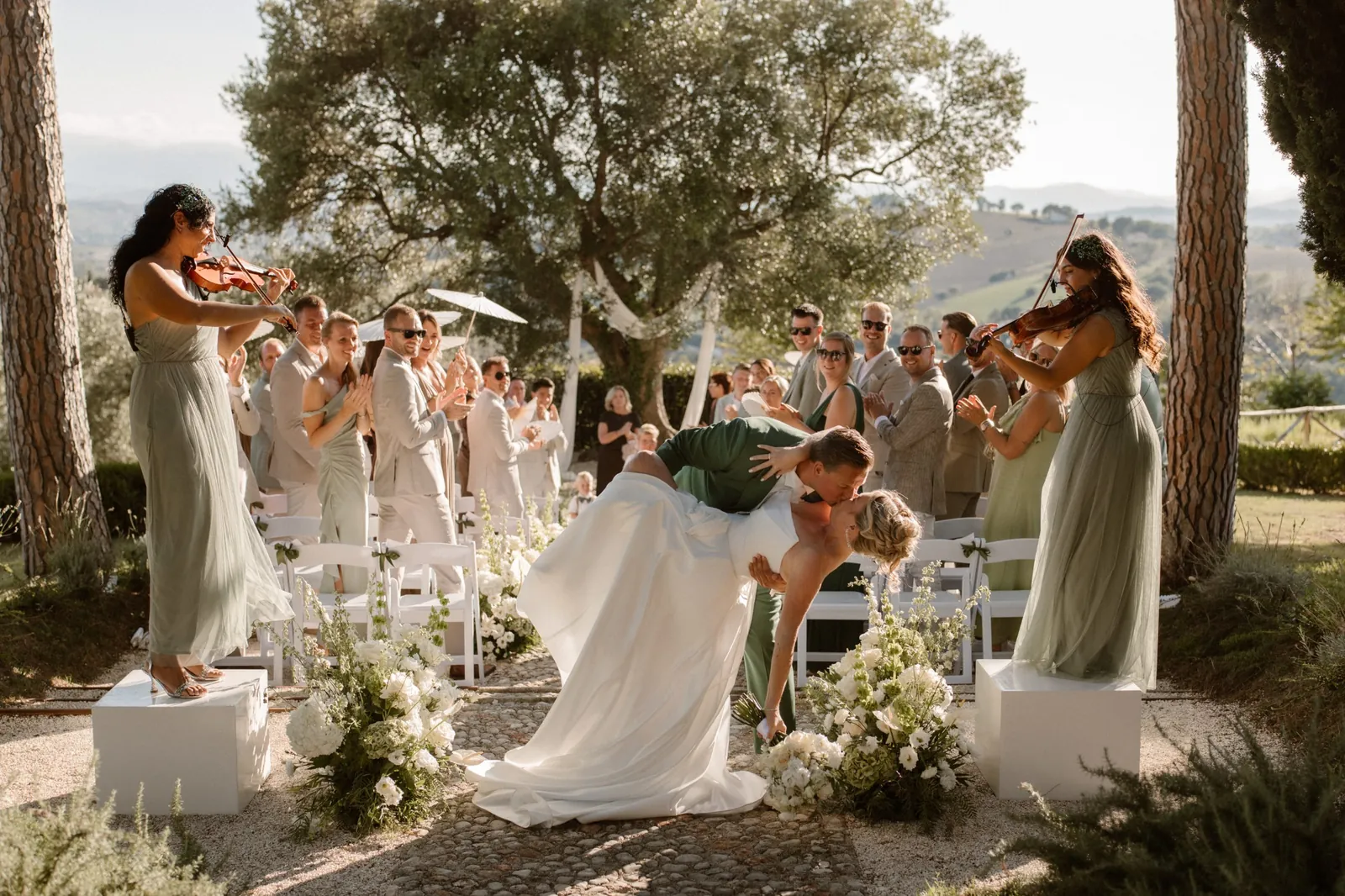
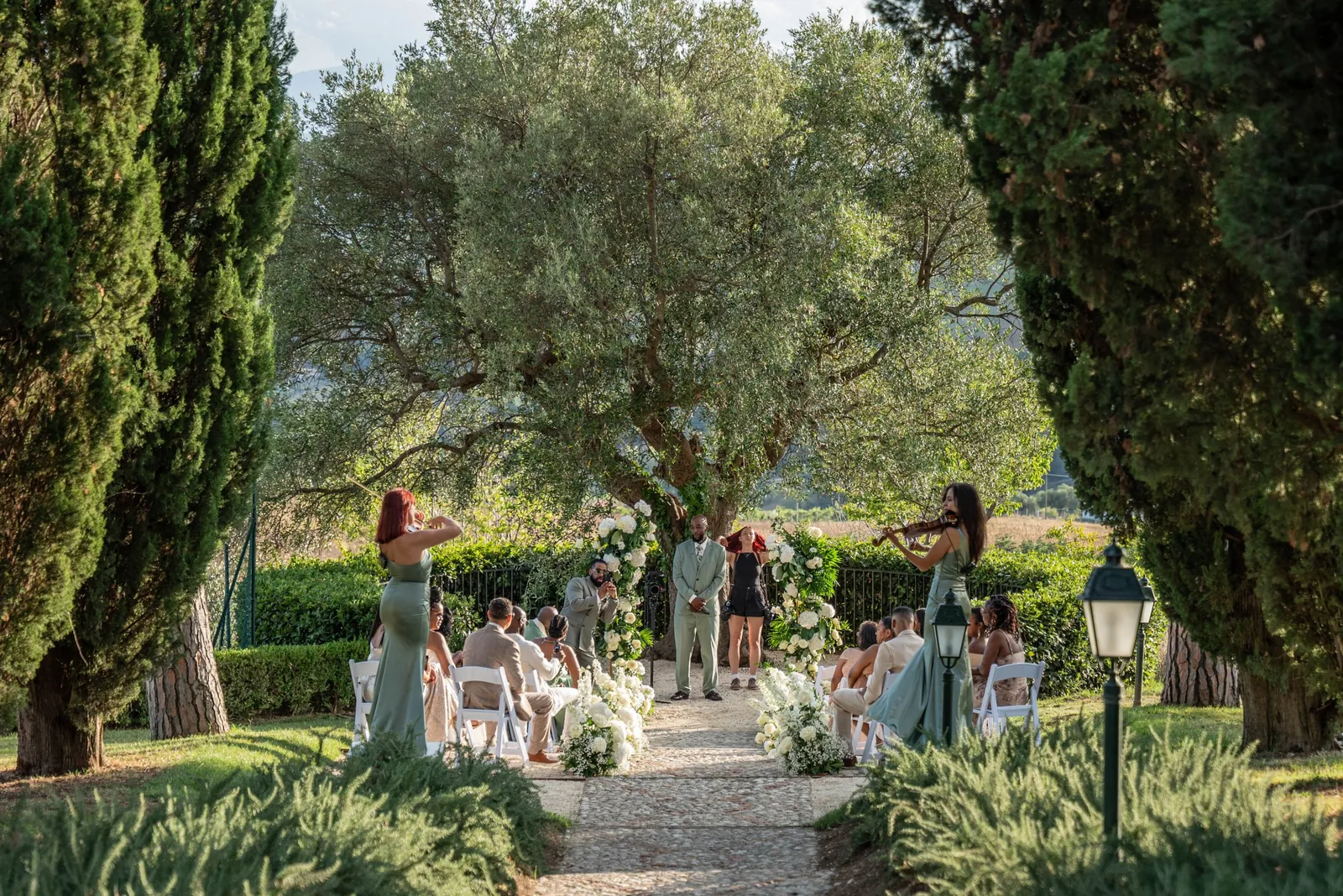
The popular alternative is to sign the legal papers at a registry office at home, quietly, a few days or weeks before you fly. Then the ceremony in Italy can be exactly what you want: your own words, your own officiant, the place you fell for. That's the symbolic ceremony, and we'll look at it properly in a separate post.
Either way, at Maniero you always work with a wedding planner, and the ceremony side (officiant and paperwork) is something they can guide you through. It's not included in the villa rental or in the example in our Wedding brochure 2029.
When should you start the paperwork?
Not too early (those validity periods again), and not too late, because appointments fill up. A rough order:
- Choose the type of ceremony as soon as you've booked your venue.
- Check your country's requirements with your embassy or consulate and with the comune, through your planner.
- Order documents within their validity window, usually a few months before the date.
- Book the comune appointments and the interpreter.
- Arrive a few days early if you need to make the declaration in person.
Our real planning timeline shows how this fits around the rest of the planning.
Rules change, and every comune works a little differently. Treat this as a starting point and check everything with your planner and your consulate.
Ready to plan the fun part?
Whatever ceremony you choose, the setting matters. Have a look at the wedding venue page or the FAQ, and when you know your year (we're taking requests for 2029, and 2028 has a waiting list), get in touch.
Maniero Montecassiano
An exclusive-use villa for weddings, holidays and retreats in Le Marche. Only ten stays a year.